Why Online Jiu Jitsu Is the Perfect Homeschool PE Program
Oct 18, 2026
Why Online Jiu Jitsu Is the Perfect Homeschool PE Program
By a parent and educator | Jiu Jitsu Graduate
Homeschool families are some of the most thoughtful, creative educators I know. They design reading plans, choose math curricula, organize science experiments, and plan field trips. But when it comes to physical education, many homeschool parents feel stuck.
Should PE be a walk around the neighborhood? A few sports leagues each season? Some online workout videos? Those are all good activities, but they often lack what homeschool parents value most: structure, progression, measurable goals, and a real curriculum.
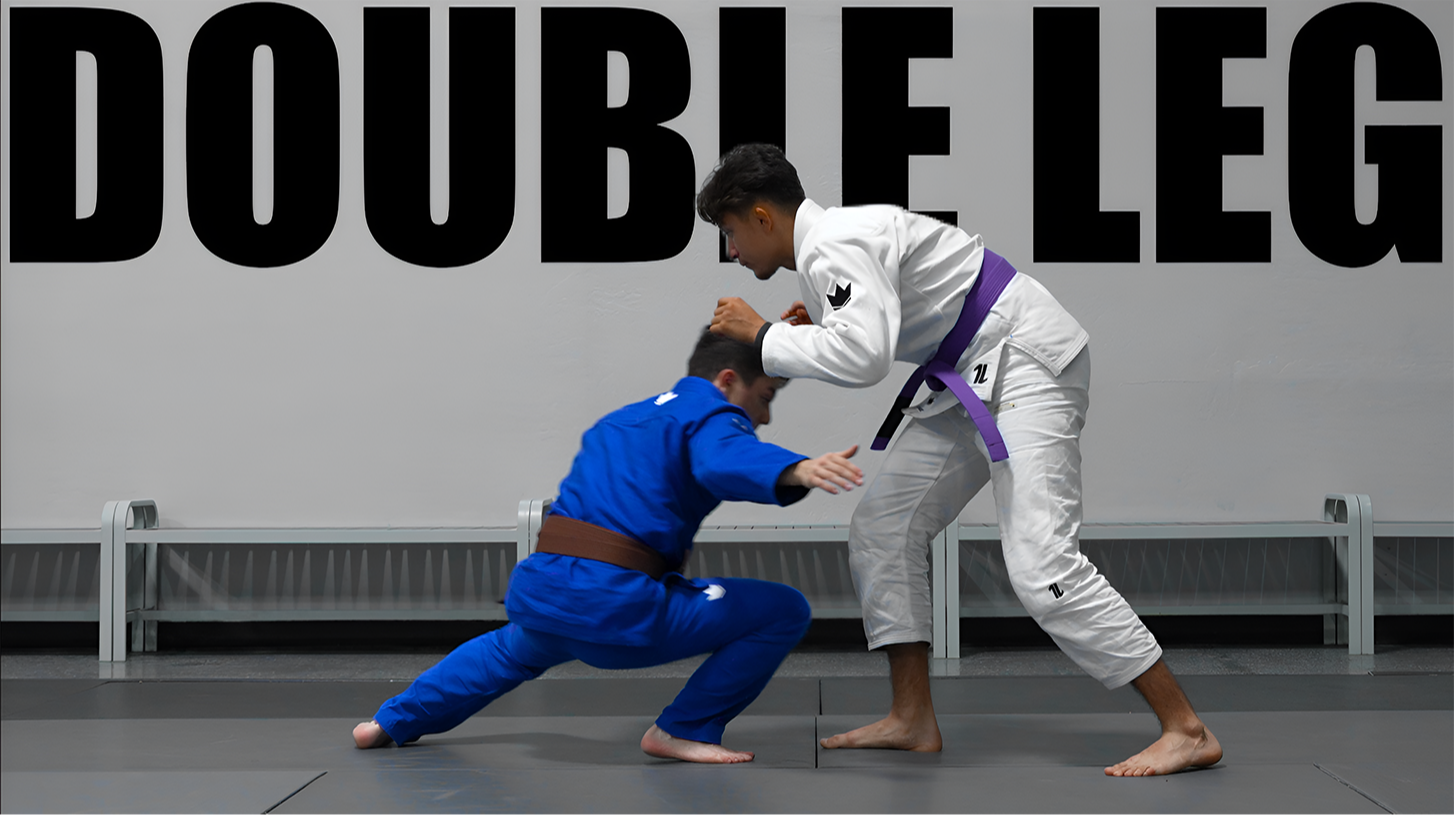
As a parent and an educator, I believe online youth Jiu Jitsu fills this gap beautifully. It offers a true, step-by-step curriculum, clear milestones, evaluations, and the kind of character development that families want for their children. It can be done at home, scheduled during the school day, practiced with siblings, and documented as part of a student's learning plan. For Arizona families using an Empowerment Scholarship Account (ESA), it can also be paid for through ClassWallet.
In this post, I'll explain why online Jiu Jitsu works so well as homeschool PE, what research says about children's physical activity and martial arts, and how to build Jiu Jitsu into your homeschool week.
What Homeschool Families Need From a PE Program
Before we talk about Jiu Jitsu, let's think about what makes a strong homeschool PE program. Most homeschool parents look for:
- A clear curriculum. Lessons that build on each other in a logical order.
- Measurable progress. Milestones that show what a student has learned.
- A way to check understanding and skill.
- Physical benefits. Strength, flexibility, endurance, coordination, and balance.
- Character development. Discipline, respect, perseverance, and self-control.
- The ability to schedule PE when it works for the family.
- Multi-age options. Activities siblings of different ages can do together.
- Records that support portfolios, learning plans, or ESA requirements.
Many PE options meet a few of these needs. A well-structured online Jiu Jitsu program can meet all of them.
What the Research Says About Children's Activity, Homeschool Fitness, and Martial Arts
Here is a short summary of relevant research for homeschool families. (Full references appear at the end of this post.)
Children need daily, structured activity. The CDC recommends that children and adolescents ages 6 to 17 get 60 minutes or more of moderate-to-vigorous physical activity daily. As part of that time, children should include vigorous activity and muscle-strengthening activity at least 3 days a week (CDC). The CDC lists activities like climbing and push-ups as muscle-strengthening examples (CDC). Jiu Jitsu naturally includes body-weight strength, pushing, pulling, and full-body movement.
Homeschool families are often active, but fitness needs structure. A pilot study from the National Home Education Research Institute found that almost three-quarters of homeschool participants engaged in some form of physical activity at least five days a week (NHERI). However, a study of homeschool students found that participation in organized sports and physical activities alone was not associated with higher fitness on push-up or curl-up tests (PubMed). Another review noted research finding no difference in activity levels between homeschool and public-school children, but slightly lower aerobic fitness in older homeschool males (NHERI). The takeaway for parents: intentional, structured physical education matters.
Martial arts can support self-regulation and classroom behavior. Lakes and Hoyt randomly assigned 207 children in kindergarten through 5th grade to a martial arts program or traditional physical education. After three months, the martial arts group showed greater gains in cognitive and emotional self-regulation, prosocial behavior, classroom conduct, and even mental math performance (Lakes & Hoyt, 2004).
Children can learn movement skills from video. Research comparing video modeling and live modeling for teaching motor skills found that both were effective, with no significant difference between them (International Journal of Inclusive Education). That supports the value of high-quality video instruction for home learners.
Arizona ESA funds can support education services and curriculum. The Arizona Department of Education's ESA Handbook outlines approved expense categories and rules for ESA families (Arizona Department of Education ESA Handbook).
Together, these findings support a simple idea: homeschool students benefit from PE that is structured, skill-based, and consistent, and Jiu Jitsu delivers all three.
8 Reasons Online Jiu Jitsu Is the Perfect Homeschool PE Program
- It Has a Real, Progressive Curriculum
The biggest difference between online Jiu Jitsu and a random workout video is the curriculum. At Jiu Jitsu Graduate, lessons are organized by position, just like Jiu Jitsu itself. Within each position, individual techniques are broken into clear, focused lessons. Students learn foundational skills first and build toward more advanced techniques over time.
For homeschool parents, this feels familiar. It's like a math curriculum where addition comes before multiplication. Each lesson prepares students for the next, and parents always know where their child is in the sequence.
The curriculum also grows with the student. New techniques are added every week, and members have access to a vault of 1,000+ instructional videos. Your child will never run out of material to learn.
- It Includes Measurable Milestones
Homeschool parents love being able to show progress, and the Jiu Jitsu belt system makes progress easy to measure.
- One completed position earns a badge.
- Five positions earn a stripe and certificate.
- Four stripes earn a belt after evaluation.
These milestones work like grade levels or unit completions. They give students short-term and long-term goals, and they give parents clear evidence of learning. Certificates can be added to a portfolio, and badges and belts can be tracked in a learning log.
- It Includes Real Assessment
Assessment is a core part of any strong curriculum. At Jiu Jitsu Graduate, students move through structured reviews and quizzes to confirm their understanding. Every belt is earned through evaluation, either in person or through a remote video evaluation, reviewed by a Jiu Jitsu Graduate Coach.
If a student needs more practice, re-evaluation is available. This mastery-based approach mirrors best practices in education. Students don't move ahead because time has passed. They move ahead because they've demonstrated the skill.
- It Builds Strength, Flexibility, and Coordination
Jiu Jitsu is a complete physical education experience. Students push, pull, bridge, roll, and move their bodies through a wide range of motion. They build:
- Muscular strength and endurance through body-weight movement and partner work
- Flexibility and mobility through hip movement, stretching, and guard work
- Balance and coordination through controlled positions and transitions
- Cardiovascular fitness through drilling and movement games
- Body awareness through understanding where their body is and how to move it
These benefits line up with the CDC's guidance that children include muscle-strengthening and vigorous activity in their weekly routine (CDC). Jiu Jitsu checks many PE boxes in a single activity.
- It Teaches Character and Self-Regulation
Many homeschool families choose home education because they want to shape their children's character as well as their knowledge. Jiu Jitsu is a natural partner in that mission.
Every session teaches respect for partners, patience with the learning process, self-control under pressure, and perseverance through challenges. Our home training rules, Safety, Space, and Rules, reinforce responsibility and care for others.
Research on martial arts supports this. In the Lakes and Hoyt study, children in a martial arts program showed greater improvements in self-regulation, prosocial behavior, and classroom conduct than children in standard PE (Lakes & Hoyt, 2004). For homeschool parents, that means PE time can also be character education time.
- Siblings of Different Ages Can Train Together
Homeschool families often have multiple children at different grade levels. Finding activities everyone can do together is a constant challenge. Jiu Jitsu solves it.
Siblings can watch lessons together, practice as training partners, and each follow their own progress through the curriculum. Older siblings learn leadership, patience, and control. Younger siblings learn courage and communication. Everyone gets a quality PE experience at the same time, in the same space.
This also makes scheduling simpler. Instead of separate PE plans for each child, the whole family can share one PE block.
- It Fits Any Homeschool Schedule
One of the joys of homeschooling is flexibility, and online Jiu Jitsu fits that perfectly. Families can schedule PE in the morning to wake up the body before academics, mid-day as a movement break, or in the afternoon to wrap up the school day.
Lessons are always available, so travel, appointments, field trips, and busy seasons don't mean falling behind. Students can pick up right where they left off. For families who prefer a year-round schedule or block scheduling, Jiu Jitsu adapts easily.
- It Can Be Paid for With Arizona ESA Funds
For Arizona families in the Empowerment Scholarship Account program, cost is an important factor. Jiu Jitsu Graduate LLC works with Arizona ESA families through ClassWallet, so many families can use ESA funds for eligible online instruction, in-person instruction, evaluations, and curriculum-based materials.
Families should always review the current Arizona Department of Education ESA Handbook for the latest rules on eligible expenses. Our ESA Payment page walks parents through the process step by step.
For many families, this makes a quality Jiu Jitsu education accessible with little or nothing out of pocket.
How Online Jiu Jitsu Compares to Other Homeschool PE Options
Homeschool families have many PE choices, and most of them have real value. Here is how online Jiu Jitsu compares to some common options.
|
PE Option |
Strengths |
What It Often Lacks |
|
Neighborhood walks and outdoor play |
Free, flexible, great for daily movement |
Structured skill progression and assessment |
|
Seasonal sports leagues |
Teamwork and competition |
Year-round consistency and individual progress tracking |
|
Online workout videos |
Convenient and accessible |
A progressive curriculum, milestones, and evaluation |
|
Co-op PE classes |
Social time with other homeschoolers |
Flexible scheduling and individualized pacing |
|
Online youth Jiu Jitsu |
Curriculum, milestones, evaluations, character development, multi-age, flexible |
Best paired with outdoor play for extra daily activity |
The best homeschool PE plans often combine several of these options. Online Jiu Jitsu works well as the structured core of a PE plan, with outdoor play, sports, and co-op activities adding variety and extra movement throughout the week.
Homeschool Jiu Jitsu by Age Group
One of the strengths of Jiu Jitsu is that it adapts to every stage of a child's development. Here is what Jiu Jitsu PE can look like at different ages.
Early Elementary (Kindergarten to Grade 2)
Young children learn best through play, movement, and short bursts of focus. Sessions of 20 to 30 minutes work well. Focus on basic movements like rolling, bridging, shrimping, and simple positions. Use games to build body awareness and coordination. Parents should be closely involved as partners and supervisors. At this age, earning badges is incredibly exciting and helps young learners understand goal setting.
Upper Elementary (Grades 3 to 5)
Children in this age range can focus longer and understand more detailed instructions. Sessions of 30 to 45 minutes are appropriate. Students can begin connecting techniques together and taking more responsibility for their practice. This is a great age to introduce training journals and self-tracking, and to start connecting Jiu Jitsu to science and math lessons.
Middle School (Grades 6 to 8)
Middle school students are ready for more independence and deeper understanding. They can follow lessons on their own, set personal goals, and help coach younger siblings. Jiu Jitsu also offers valuable support during a stage of life when confidence and self-image can be fragile. The structure, community, and earned achievement of the belt system help students feel capable and grounded.
High School (Grades 9 to 12)
High school students can take full ownership of their training. They can manage their own schedules, prepare for evaluations, and mentor younger family members or neighborhood youth. Jiu Jitsu also builds discipline, resilience, and leadership skills that support college, careers, and adult life. For older students, training can be a meaningful physical education credit and a lifelong fitness habit.
How Jiu Jitsu Connects to Other Homeschool Subjects
One of the most exciting things about Jiu Jitsu as homeschool PE is how naturally it connects to other subjects. Creative homeschool parents can use it to support cross-curricular learning.
Science. Jiu Jitsu is a living lesson in physics and biology. Students experience leverage, balance, center of gravity, and force. Parents can connect techniques to simple machines like levers, or discuss which muscles and joints are used in each movement.
Health. Training opens conversations about nutrition, hydration, sleep, recovery, and injury prevention. Students learn to listen to their bodies and care for their health.
Math. Students can track training minutes, count repetitions, chart progress toward stripes and belts, and calculate how many positions remain before their next promotion.
Language arts. Students can keep a training journal, write reflections after each session, explain techniques in their own words, or write a short report on the history of Jiu Jitsu.
Social and emotional learning. Jiu Jitsu teaches respect, empathy, communication, perseverance, and self-control, all core social and emotional skills.
Geography and history. Older students can research how Jiu Jitsu developed and spread to different parts of the world.
These connections turn PE into a richer learning experience and help children see how knowledge connects across subjects.
How to Document Jiu Jitsu as Homeschool PE
Documentation helps homeschool families track learning and maintain records. Here are a few simple ways to document Jiu Jitsu as PE:
- Training log. Record the date, length, and focus of each session.
- Lesson tracker. List the positions and techniques completed.
- Milestone record. Note each badge, stripe, certificate, and belt with the date earned.
- Quiz and evaluation results. Keep records of completed quizzes and evaluations.
- Save copies of stripe certificates and belt promotions in the student's portfolio.
- Reflection journal. Have students write a few sentences about what they learned and what they want to improve.
- Photos and videos. With permission, capture training moments and promotions to include in a portfolio.
For ESA families, keep receipts and invoices organized as required by the program. Our invoices are designed to include the details ESA families need.
Setting Up Safe Home Training for Homeschool PE
Safety is always the first priority. At Jiu Jitsu Graduate, home training follows three rules:
- Safety: Safety first, always. Move slowly, stay in control, and tap early. A technique done safely and slowly is worth more than one done fast and rough.
- Space: Take good care of your mat space and always review the area before training. Protective mats are required for youth technical training.
- Rules: Respect your partner. Your partner is helping you learn, so take care of them and follow the Golden Rules.
Choose a dedicated training area if possible, such as a spare room, garage, or open living space. Keep mats clean and secure, remove hard objects, and supervise younger students. Visit our "Welcome to Home Training" page for full guidance.
A Sample Homeschool PE Week With Jiu Jitsu
|
Day |
PE Focus |
Time |
|
Monday |
Watch a new lesson, warm up, and practice the technique slowly with a sibling or parent |
30–45 minutes |
|
Tuesday |
Outdoor activity such as walking, biking, or running games |
30–60 minutes |
|
Wednesday |
Review Monday's technique, drill 10 to 15 times each side, play a positional game |
30–45 minutes |
|
Thursday |
Outdoor or recreational activity of choice |
30–60 minutes |
|
Friday |
Review older techniques, complete quizzes, and write a short training reflection |
30–45 minutes |
This plan combines structured Jiu Jitsu instruction with other activities to help children work toward daily physical activity goals. Adjust it to fit your family's schedule and your children's ages.
A Sample Jiu Jitsu PE Lesson Plan
Homeschool parents often like to see what a single lesson looks like from start to finish. Here is a simple 40-minute lesson plan you can use with the online curriculum.
Objective: Students will learn and safely practice one new technique from the current position and demonstrate it with a partner.
Materials: Protective mats, a screen to view the lesson, a training journal, and water.
- Space and safety check (3 minutes). Students review the mat space, remove any objects, and restate the Safety, Space, and Rules guidelines.
- Warm-up (7 minutes). Students complete movement drills such as forward rolls, bridging, shrimping, and light stretching to prepare the body.
- Instruction (5 minutes). Students watch the online lesson together. The parent pauses the video to discuss the key steps and ask questions such as, "What is the first thing you do?"
- Guided practice (12 minutes). Students practice the technique slowly with a partner, switching roles every few repetitions. The parent observes and encourages.
- Positional game (8 minutes). Students play a short, controlled game that uses the new technique, such as holding a position or escaping to the edge of the mat.
- Cool-down and reflection (5 minutes). Students stretch, drink water, and write two or three sentences in their training journal about what they learned and what they want to improve.
Assessment: The student explains and demonstrates the technique to the parent. When the position is complete, the student takes the position quiz to earn their badge.
This format mirrors a classic lesson plan, with objective, instruction, guided practice, application, and reflection, making it easy to integrate into any homeschool routine.
Tips for Homeschool Parents
Treat Jiu Jitsu like any other subject. Put it on the schedule, track progress, and celebrate milestones just as you would in reading or math.
Learn alongside your children. You don't need experience. Watching lessons and practicing together makes you a better partner and gives your children a great example of lifelong learning.
Use warm-ups as movement breaks. Short Jiu Jitsu movement drills, like shrimping or bridging, make great breaks between academic subjects.
Encourage reflection. Ask children what they learned, what was hard, and what they want to work on next. Reflection deepens learning.
Connect with other homeschool families. Invite another homeschool family to train together. It builds community and gives children more training partners.
Praise effort and persistence. Focus on hard work and improvement. Every child progresses at their own pace.
Frequently Asked Questions
Can online Jiu Jitsu count as homeschool PE?
Many homeschool families use online Jiu Jitsu as a structured physical education program because it includes a curriculum, milestones, and evaluations. Check your state's homeschool requirements for documentation guidelines.
Can Arizona ESA funds be used for Jiu Jitsu Graduate?
Jiu Jitsu Graduate LLC works with Arizona ESA families through ClassWallet for eligible instruction and curriculum-based materials. Review the current ESA Handbook and our ESA Payment page for details.
What ages is the program designed for?
Our youth program serves students from kindergarten through 12th grade, with lessons that siblings of different ages can practice together.
How much time should homeschool students spend on Jiu Jitsu each week?
Two to four sessions of 30 to 45 minutes works well for many families. Combine Jiu Jitsu with other activities to help children work toward the CDC's daily activity recommendation.
How are students assessed?
Students complete reviews and quizzes for each position and earn belts through in-person or remote video evaluations by a Jiu Jitsu Graduate Coach.
What equipment do we need?
Protective mats are required for youth technical training. A Jiu Jitsu Gi with belt or No Gi rashguard and shorts is recommended for curriculum instruction.
Conclusion: Physical Education That Builds Body, Mind, and Character
Homeschool families deserve a PE program that matches the quality of the rest of their curriculum. Online Jiu Jitsu delivers a progressive curriculum, measurable milestones, real assessment, full-body fitness, character development, multi-age flexibility, and, for Arizona families, ESA-friendly payment.
Research on children's physical activity, homeschool fitness, martial arts, and video-based learning all point to the same conclusion: children thrive when physical education is structured, consistent, and meaningful.
Best of all, Jiu Jitsu gives homeschool students something that lasts well beyond any school year. The strength, discipline, confidence, and love of movement they build on the mat can stay with them for life. A PE program that teaches children how to take care of their bodies, respect others, and keep growing is one of the most valuable parts of any homeschool education.
That is why Jiu Jitsu Graduate at www.jiujitsugraduate.com is the ideal online training for youth success and growth. With a position-based curriculum, guided home training, weekly new techniques, a vault of 1,000+ videos, and belt promotions earned through real evaluation, Jiu Jitsu Graduate gives homeschool students a guided path to grow stronger, more confident, and more disciplined.
Guided on the Path. Nurtured to Succeed. Always Moving Forward.
Start your homeschool PE journey today at www.jiujitsugraduate.com.
References
- Centers for Disease Control and Prevention. Child Activity: An Overview. https://www.cdc.gov/physical-activity-basics/guidelines/children.html
- Centers for Disease Control and Prevention. What You Can Do to Meet Physical Activity Recommendations. https://www.cdc.gov/physical-activity-basics/guidelines/index.html
- National Home Education Research Institute. Physical Activity Level of Homeschool Children and Families: A Pilot Study. https://nheri.org/physical-activity-level-of-homeschool-children-and-families-a-pilot-study/
- Organized sports and physical activities as sole influencers of fitness: The homeschool population. PubMed. https://pubmed.ncbi.nlm.nih.gov/33467328/
- National Home Education Research Institute. Homeschoolers and Health. https://nheri.org/homeschoolers-and-health/
- Lakes, K. D., & Hoyt, W. T. (2004). Promoting self-regulation through school-based martial arts training. Journal of Applied Developmental Psychology, 25(3), 283–302. https://eric.ed.gov/?id=EJ731773
- Using video and live modelling to teach motor skill to children with autism spectrum disorder. International Journal of Inclusive Education. https://www.tandfonline.com/doi/full/10.1080/13603116.2018.1441335
- Arizona Department of Education. ESA 2025–2026 Handbook. https://www.azed.gov/sites/default/files/2025/06/ESA 2025-2026 Handbook.pdf
Author