The Benefits of Online Jiu Jitsu for Kids: Why Learning at Home With Family Builds Confident, Disciplined Youth
Oct 17, 2026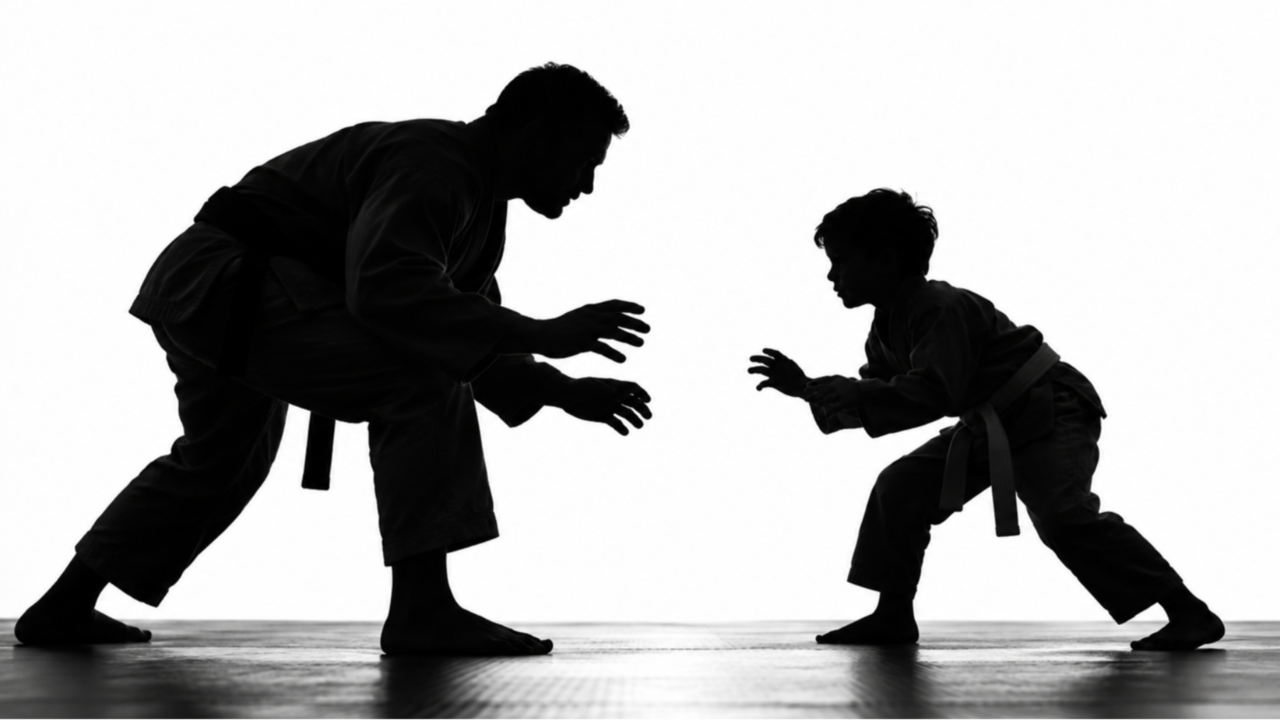
The Benefits of Online Jiu Jitsu for Kids: Why Learning at Home With Family Builds Confident, Disciplined Youth
By a parent and educator | Jiu Jitsu Graduate
Every parent wants the same thing for their child: confidence, good friends, a healthy body, a focused mind, and the strength to handle whatever life throws at them. As an educator, I want one more thing. I want children to learn how to learn, to set goals, work through challenges, and feel the pride of earning something real.
Few activities deliver all of that the way Jiu Jitsu does. And today, families no longer have to choose between a crowded weeknight schedule and their child's growth. With a well-structured online youth Jiu Jitsu program, kids can learn real technique from qualified coaches, practice at home with siblings, parents, friends, and neighborhood kids, and advance through a true belt system, all on a schedule that works for the family.
In this guide, I'll walk you through 10 powerful benefits of online Jiu Jitsu for kids, plus 5 bonus benefits, drawn from my own experience as a parent and educator and supported by published research on martial arts, family physical activity, and how children learn movement skills. Whether you homeschool, use an Arizona ESA account, live far from an academy, or simply want more family time that matters, this post will show you why home Jiu Jitsu training may be one of the best decisions you make for your child.
What Is Online Youth Jiu Jitsu With Home Training?
Before we get into the benefits, let's define what we mean, because not all "online training" is the same.
A legitimate online youth Jiu Jitsu academy is not a random playlist of videos. It is a progressive curriculum, organized the way Jiu Jitsu itself is organized: by position. Within each position, techniques are broken down into short, focused lessons. Students watch, practice, review, and then prove their understanding through quizzes and evaluations before they move forward.
Home training is the part where the learning comes alive. After watching a lesson, students step onto a safe mat space at home and practice with a training partner, often a parent, brother, sister, cousin, or neighborhood friend. This is where muscle memory is built, where confidence grows, and where children turn knowledge into skill.
At Jiu Jitsu Graduate, we say it simply: Home Training Is Where You Grow. Our home training is built on three rules:
- Safety: Safety first, always. A technique done safely and slowly is worth more than one done fast and rough.
- Space: Take good care of your mat space and always review the area before training.
- Rules: Respect your partner. Your partner is helping you learn, so take care of them and follow the Golden Rules.
When you combine a structured online curriculum, guided home practice, and real evaluations for every belt, you get something powerful: a path where children are guided, nurtured, and always moving forward.
Why Jiu Jitsu Is Especially Well Suited for Kids
Jiu Jitsu is different from many other martial arts and sports. Instead of punching or kicking, students learn leverage, positioning, and control. Smaller students learn that technique can overcome size and strength, which is an empowering lesson for any child. Training is done at a controlled pace with a cooperative partner, and students learn to "tap" to signal their partner to stop, which builds communication and trust from day one.
Jiu Jitsu is also a thinking art. Every position works like a puzzle with many possible solutions. Children learn to stay calm, analyze a problem, and choose a smart next step. Teachers often describe this as problem-solving, planning, and decision-making, the same executive skills we work to develop in the classroom.
Finally, Jiu Jitsu is naturally social. You cannot practice it alone. Every technique requires a partner, which means every session is a lesson in cooperation, respect, and empathy. That makes it a perfect fit for training with family, siblings, and friends at home.
What the Research Says About Martial Arts, Family Activity, and Learning by Video
As an educator, I don't like to make claims without evidence. Here is a short summary of what studies and scholarly reviews tell us. (Full references appear at the end of this post.)
Martial arts can build self-regulation in children. In a well-known study published in the Journal of Applied Developmental Psychology, researchers Kimberley Lakes and William Hoyt randomly assigned 207 children from kindergarten through 5th grade to either a martial arts program or a traditional physical education class. After three months, the martial arts group showed greater improvements in cognitive self-regulation, emotional self-regulation, prosocial behavior, classroom conduct, and even performance on a mental math test (Lakes & Hoyt, 2004).
Martial arts training is linked to better mental health and wellbeing. A systematic review and meta-analysis by Moore, Dudley, and Woodcock, published in the Journal of Bodywork and Movement Therapies, found that martial arts interventions produced small to moderate improvements in mental health and wellbeing outcomes (Moore, Dudley & Woodcock, 2020; summarized in PMC).
Families who move together help children move more. A large systematic review in Obesity Reviews examined 47 family-based physical activity programs and found that 66% produced a significant positive effect on children's physical activity. The authors noted that parental support, including co-participation and encouragement, is consistently linked to more active kids (Brown et al., 2016).
Family physical activity can strengthen family relationships. A systematic review in Family Process found that family physical activity programs can improve family cohesion and organization, especially for children ages 5 to 12 (Family Process review).
Children can learn movement skills effectively from video. Research comparing video modeling and live modeling for teaching motor skills found that both methods were effective, with no significant difference between them (International Journal of Inclusive Education). Another study of 8-year-old physical education students found that video modeling of an expert performing a kick helped children develop self-regulation abilities (International Journal of Sport Psychology).
To be fair and transparent, research on martial arts is still growing, and results can vary depending on the program, the instructor, and how the training is structured. That is exactly why structure matters. A program built on clear progression, safe practice, coach evaluation, and positive values gives children the best chance to experience these benefits.
Now, let's look at what this means for your family.
10 Benefits of Online Jiu Jitsu for Kids Who Train at Home
- Kids Build Real Confidence, One Earned Skill at a Time
Confidence is not something we can hand to a child. It is built through experience, specifically the experience of trying something hard, struggling, practicing, and finally succeeding.
Jiu Jitsu is built for this. Every position has techniques to learn, and every technique has small details that take time to master. When a child finally escapes from the bottom of side control or completes a smooth sweep after weeks of practice, something changes. They learn, deep down, that effort leads to results.
Online training with home practice amplifies this because children get many more chances to succeed. Instead of seeing a technique once in a busy class and forgetting it by next week, they can rewatch the lesson, practice it ten times with a sibling, and come back the next day to try again. Each small victory adds up.
At Jiu Jitsu Graduate, progress is visible and earned. Students collect badges for completed positions, stripes and certificates as they advance, and belts that are awarded only after evaluation. When a child earns their next rank, they know it is real, because they demonstrated the skill. That kind of earned confidence carries into the classroom, the playground, and every new challenge they face.
As a parent, there is nothing like watching your child stand a little taller because they know they can do hard things.
- Children Develop Focus, Self-Control, and Self-Regulation
Teachers talk a lot about self-regulation: the ability to manage attention, emotions, and behavior. It is one of the strongest predictors of success in school and life, and it is one of the hardest skills to teach.
Martial arts has a long tradition of building exactly this. The Lakes and Hoyt study found that children in a martial arts program showed greater gains in cognitive and emotional self-regulation, classroom conduct, and prosocial behavior than children in standard physical education (Lakes & Hoyt, 2004).
Jiu Jitsu is especially good at building self-control because of how it is practiced. Students must move slowly and carefully, listen for a partner's tap, stay calm under pressure, and think through each step of a technique. You cannot rush Jiu Jitsu and do it well.
Home training adds another layer. Without a coach standing over them, children learn to manage their own practice: following the lesson, staying on task, and respecting the rules of the mat. Over time, they become more self-directed learners. Parents often notice the difference first in small ways, such as a child who can take a deep breath instead of losing their temper, or one who finishes a homework assignment without five reminders.
- Family Bonding Becomes Part of the Weekly Routine
Ask any parent what they wish they had more of, and "quality time with my kids" is near the top of the list. Online Jiu Jitsu turns training into family time.
When parents and children practice together, something special happens. The parent is no longer just the driver who waits in the lobby. They become a training partner, a cheerleader, and a fellow learner. Children love teaching their parents a new move. Parents love seeing their children's skills grow up close.
Research supports this. A study published through the University of Cambridge found that children averaged about 70 minutes per day of physical activity together with a parent, which made up about a third of their daily activity, and that this co-participation was positively linked to total daily activity for both children and parents (Cambridge repository study). A systematic review in Family Process also found that family physical activity programs can improve family cohesion and organization, especially among families with children ages 5 to 12 (Family Process review).
Parents in research on co-participation describe the major benefits as spending quality time together, improving children's health and wellbeing, and developing physical skills (Health Promotion International).
In my own family, our mat time has become one of the most joyful parts of the week. There is laughter, teamwork, and plenty of "let's try that again." Those moments are memories in the making.
- Siblings Learn Teamwork, Patience, and Respect for Each Other
If you have more than one child, you know that siblings can be best friends one minute and rivals the next. Jiu Jitsu gives that energy a healthy, structured outlet.
When siblings train together, they must cooperate to learn. One child plays the role of partner while the other practices. Then they switch. This simple rhythm teaches patience, turn-taking, and empathy. An older sibling learns to slow down and control their strength. A younger sibling learns to be brave and communicate clearly.
Our Golden Rules make respect non-negotiable. Your partner is helping you learn, so you take care of them. That idea, practiced on the mat week after week, starts to show up in how siblings treat each other off the mat too.
There is also a practical benefit: siblings can train together any time. No carpool, no waiting for class, no extra trips. Two or three children can grow side by side in the same home training space, each progressing through their own curriculum and celebrating each other's promotions.
Many parents tell us that the mat becomes a place where sibling conflicts turn into sibling teamwork. That is a win for the whole household.
- Neighborhood Friends Build Community and Healthy Friendships
Home training does not have to be limited to family. When children invite friends or neighborhood youth to train with them, the living room or garage becomes a small community of learners.
This is old-fashioned neighborhood play, upgraded with structure, safety, and purpose. Instead of hours on a screen, kids are moving, learning, and connecting face to face. They practice respect, communication, and teamwork with peers. They encourage each other, help each other remember the steps, and celebrate each other's progress.
For children who are shy or new to an area, this can be a wonderful way to build friendships. A shared activity gives kids something to talk about and something to work toward together. Research on families taking part in physical activity programs has highlighted benefits such as children experiencing new things, developing character, and increasing social contact, particularly for shy children (Engaging Families in Physical Activity Research).
A quick note for parents: always get permission from other families, supervise training, and follow your home safety rules. When done right, a neighborhood Jiu Jitsu group can become one of the healthiest social outlets your child has.
- Kids Learn at Their Own Pace With Lessons They Can Replay
Every child learns differently. Some pick up a move on the first try. Others need to see it five times, break it into pieces, and practice slowly before it clicks. In a traditional class, the pace is set by the group. Online training lets each child learn at the pace that works for them.
With video lessons, students can pause, rewind, and rewatch until they understand. They can slow down a tricky detail, review a technique the night before an evaluation, or revisit an older lesson to sharpen their fundamentals. Nothing is missed because of a bad day, a noisy room, or a distracted moment.
Research suggests this approach works. Studies comparing video modeling and live modeling for teaching motor skills have found both to be effective (International Journal of Inclusive Education), and video modeling has been shown to support self-regulation in children learning physical skills (International Journal of Sport Psychology).
As an educator, I see this as one of the biggest advantages of online learning. It honors the fact that children are individuals. A student who needs more time gets it without embarrassment. A student who is ready to move ahead is not held back. Everyone progresses through mastery, not through the calendar.
- A Structured Curriculum With a Clear, Accountable Belt Path
One of the biggest concerns parents have about online martial arts is legitimacy. Will my child actually learn real skills? Will their belt mean anything?
A legitimate online academy answers these questions with structure. At Jiu Jitsu Graduate, lessons are organized by position, just like the art itself. Within each position, individual techniques are broken down and explained in clear, focused segments. Students then move through structured reviews and quizzes that confirm understanding before they advance, with re-evaluation available so no one is left behind.
The path is simple and accountable: learn the position, master the techniques, prove the knowledge, and earn the next rank.
Progress is recognized every step of the way. One completed position earns a badge. Five positions earn a stripe and certificate. Four stripes earn a belt. And every belt is earned through evaluation, so achievement always reflects real skill.
For children, this structure is motivating. They always know what comes next and what they need to do to get there. For parents, it provides peace of mind. You can see exactly where your child is, what they are learning, and how they are growing. Under the guidance of a Jiu Jitsu Graduate Coach, students do not simply watch Jiu Jitsu. They learn it, are tested on it, and grow into it.
- Better Physical Fitness, Coordination, and Body Awareness
Jiu Jitsu is a full-body workout disguised as fun. Children build strength by controlling their own body weight, flexibility through hip movement and stretching, and endurance through drilling and movement patterns. They also develop balance, coordination, and spatial awareness: knowing where their body is and how to move it with control.
These are not just athletic skills. Good motor skills support confidence in other sports, playground games, and everyday activities. Many educators also recognize the connection between movement and learning, and active children often find it easier to focus in class.
Home training helps kids stay active more often. Research on family-based physical activity programs shows that involving the family can increase children's activity levels. A major review of 47 family-based interventions found that 66% had a significant positive effect on children's physical activity (Brown et al., 2016). A meta-analysis of randomized trials also found family-centered interventions were associated with increased moderate-to-vigorous physical activity in children under 13 (PMC meta-analysis).
In a world where many children spend hours sitting, a few focused Jiu Jitsu sessions each week can make a real difference. Kids burn energy, build healthy habits, and discover that exercise can be something they look forward to.
- Practical Self-Defense and Anti-Bullying Confidence
Parents often come to Jiu Jitsu because they want their child to be safe. Jiu Jitsu is uniquely suited for youth self-defense because it focuses on control, leverage, and positioning rather than striking. Children learn how to stay calm, protect themselves, escape bad positions, and control a situation without needing to hurt anyone.
Just as important, Jiu Jitsu builds the kind of calm, confident presence that often prevents problems before they start. A child who carries themselves with confidence, makes eye contact, and knows how to use their voice is less likely to be seen as an easy target.
Research on martial arts and youth wellbeing supports the value of these programs. Moore, Woodcock, and Dudley studied a martial arts-based program as an alternative approach to traditional anti-bullying efforts, focusing on building wellbeing and resilience (Moore, Woodcock & Dudley, 2019, cited in Springer review). Their broader meta-analysis found that martial arts training was associated with improvements in mental health and wellbeing (Moore, Dudley & Woodcock, 2020).
In our program, self-defense is always taught with responsibility. Students learn that Jiu Jitsu is for protection, never for picking fights. They learn to walk away when they can, use their words first, and use technique only when needed to stay safe. These lessons build both physical skill and strong character.
- Mental Health, Resilience, and a Growth Mindset
Childhood today comes with real pressure: academics, social media, friendships, and the many changes of growing up. Kids need healthy ways to manage stress and build resilience.
Jiu Jitsu is a natural resilience builder. Children learn that being stuck in a tough position is temporary, that there is always a next step, and that calm thinking beats panic. They learn to accept feedback, try again after a mistake, and keep going when something is hard. Every evaluation, especially one they need to retake, teaches them that failure is part of learning, not the end of it.
The research is encouraging. The Moore, Dudley, and Woodcock meta-analysis found that martial arts interventions produced small to moderate improvements in mental health and wellbeing (PMC summary).
Home training adds comfort and support. Children practice in a familiar space, often with people who love them. There is less fear of judgment, and more room for encouragement. Over time, kids develop what educators call a growth mindset: the belief that ability grows with effort. That belief, practiced on the mat, becomes a lifelong mindset.
5 Bonus Benefits of Online Jiu Jitsu for Kids
Bonus 1: A Flexible Schedule That Fits Real Family Life
Between school, homework, sports, church, and family commitments, many families simply cannot make a 5:30 PM class three nights a week. Online training removes that barrier. Children can train in the morning before school, in the afternoon after homework, on weekends, or whenever the family has time. Busy weeks and travel don't mean falling behind, because the lessons are always available.
Bonus 2: Lower Cost, Less Driving, and Arizona ESA Eligibility
Traditional academy memberships, gas, and time spent commuting add up. Online training is often more affordable, and you save hours each month that would otherwise be spent in the car. For Arizona families, there is another advantage: Jiu Jitsu Graduate LLC is set up to work with Arizona Empowerment Scholarship Account (ESA) families through ClassWallet, so many families can use their ESA funds for online lessons, in-person evaluations, and curriculum materials. That can make quality Jiu Jitsu education accessible with little or nothing out of pocket.
Bonus 3: A Perfect Fit for Homeschool Physical Education
Homeschool families often look for structured physical education that teaches real skills, builds character, and tracks progress. Online youth Jiu Jitsu fits this need perfectly. It offers a clear curriculum, measurable milestones, and evaluations, all things homeschool parents value. It can be scheduled during the school day, combined with other subjects, and documented as part of a student's education plan.
Bonus 4: A Huge Video Library and Fresh Techniques Every Week
Online academies can offer far more material than any single class. Jiu Jitsu Graduate members enjoy new moves and techniques released every week and access to a vault of 1,000+ instructional videos. That means kids never run out of things to learn, and curious students can explore, review, and go deeper whenever they want. Variety keeps training exciting and keeps kids coming back to the mat.
Bonus 5: Parents Stay Informed, Involved, and Empowered
With online training, parents see everything. You know exactly what your child is learning, how techniques are taught, and what values are being shared. You can watch lessons together, support home practice, and celebrate every badge, stripe, and belt. Many parents also find themselves learning right alongside their kids, picking up fitness, self-defense skills, and a new shared passion along the way.
Online Home Training and In-Person Evaluation: The Best of Both Worlds
Some parents ask whether online training can replace a traditional academy. The honest answer is that the strongest programs combine the best of both.
Online lessons give children structure, repetition, flexibility, and access to far more material than a single weekly class. Home practice gives them the time on the mat they need to build real muscle memory. But children also benefit from expert eyes on their technique, live feedback, and the accountability of being evaluated by a qualified coach.
That is why Jiu Jitsu Graduate pairs its online curriculum with in-person skill evaluations and remote video evaluations. A Jiu Jitsu Graduate Coach reviews each student's technique, corrects small mistakes before they become habits, and verifies that every promotion is earned. Students get the convenience and affordability of home training, plus the credibility and guidance of real coaching.
This hybrid model solves the most common concerns about online martial arts:
- "Who corrects my child's technique?" A coach does, through evaluations.
- "Is the belt legitimate?" Every belt is earned through evaluation, not just by watching videos.
- "Will my child stay motivated?" Badges, stripes, certificates, weekly new techniques, and clear goals keep students moving forward.
- "Is it safe?" Safety, Space, and Rules are built into every lesson, and parents stay in control of the training environment.
The result is a learning experience that is flexible enough for real family life and structured enough to produce real skill.
Tips for Parents: How to Be Your Child's Best Training Partner
You don't need a black belt to support your child's Jiu Jitsu journey. As an educator, I've found that the most helpful parents focus on encouragement, consistency, and safety rather than technique. Here are a few tips that make a big difference.
Be a learner, not a critic. Watch lessons with your child and learn together. Let them teach you what they know. Children remember more when they explain a skill to someone else, and they feel proud when a parent is curious about their progress.
Praise effort, not just results. Instead of "You're so good at that," try "I saw how hard you worked on that escape." Praising effort builds a growth mindset and helps children stay motivated when a technique is difficult.
Keep it light and fun. Smiles, laughter, and short sessions keep kids excited to come back. If your child is tired or frustrated, end with a move they already know well so they finish on a success.
Be a good partner. Give gentle, realistic resistance, move slowly, and always respect the tap. Your role is to help them learn, not to win.
Set a routine. Pick consistent days and times for home training, just like homework or reading time. Routines build habits, and habits build skill.
Celebrate milestones. When your child earns a badge, stripe, certificate, or belt, make it a moment. Post it on the fridge, share it with grandparents, or plan a small family celebration. Recognition tells children their effort matters.
A Sample Weekly Home Training Schedule
Every family is different, but here is a simple schedule that works well for many youth students:
|
Day |
Focus |
Time |
|
Monday |
Watch a new lesson and practice slowly with a partner |
20–30 minutes |
|
Wednesday |
Review Monday's technique and drill it 10–15 times each side |
20–30 minutes |
|
Friday |
Review older techniques, take the lesson quiz, and play a positional game |
20–30 minutes |
|
Weekend (optional) |
Family or neighborhood training session, or explore the video vault |
30 minutes |
As students get closer to an evaluation, they can add a short review session to polish the techniques they will demonstrate. Short, regular practice beats long, rare sessions every time.
How to Start Home Jiu Jitsu Training Safely
Ready to begin? Here are simple steps to set up a safe, successful home training routine.
- Create a safe mat space. Use thick, quality mats designed for grappling or martial arts. Protective mats are essential safety and curriculum equipment for youth technical training. Clear the area of furniture, toys, and anything hard or sharp, and leave space around the edges.
- Review the area before every session. Make sure the mats are flat and secure, the floor is clear, and there is enough room to move safely.
- Choose the right partner. Parents, siblings, cousins, and neighborhood friends all make great partners. Pair children of similar size when possible, and always supervise younger students.
- Watch first, then practice slowly. Watch the lesson together, discuss the key steps, and then practice at slow speed. Remember: a technique done safely and slowly is worth more than one done fast and rough.
- Follow the Golden Rules. Respect your partner. Tap early and let go immediately when your partner taps or says "stop." Take care of each other.
- Keep sessions short and consistent. For younger children, 20 to 30 minutes, a few times a week, is plenty. Consistency builds skill faster than occasional long sessions.
- Celebrate progress. Recognize every badge, stripe, and belt. Celebration builds motivation and makes training something kids look forward to.
For more guidance, see our "Welcome to Home Training" page.
Frequently Asked Questions About Online Jiu Jitsu for Kids
Can kids really learn Jiu Jitsu online?
Yes, when the program is structured, progressive, and includes evaluation. Research shows children can learn movement skills effectively from video modeling (International Journal of Inclusive Education). At Jiu Jitsu Graduate, online lessons are paired with home practice, quizzes, and evaluations so students build and prove real skill.
What age is best to start online youth Jiu Jitsu?
Our program is designed for youth students from kindergarten through 12th grade. Younger children benefit from shorter sessions and close parent involvement, while older students can take more ownership of their training.
Is home Jiu Jitsu training safe?
Home training is safe when families follow clear rules: use proper mats, clear the space, train slowly, supervise younger students, and respect the tap. Our Safety, Space, and Rules framework is built into every lesson.
How do belt promotions work online?
Students earn badges for completed positions, stripes and certificates as they advance, and belts after passing evaluations. Every belt is earned through demonstrated skill, so achievement always reflects real progress.
Do I need to know Jiu Jitsu to help my child?
No. Lessons are designed so parents can follow along, partner safely, and learn alongside their children. Many parents discover they love training too.
Can Arizona families use ESA funds for online Jiu Jitsu?
Jiu Jitsu Graduate LLC works with Arizona ESA families through ClassWallet for eligible services and curriculum materials. See our ESA Payment page for step-by-step instructions.
How much time does home training take each week?
Most families do well with two to four short sessions per week. Consistency matters more than length.
Conclusion: A Guided Path to Confidence, Growth, and Success
As a parent and an educator, I believe the best learning happens when children are guided, supported, and given room to grow. Online Jiu Jitsu with home training brings all of that together. Children build confidence, focus, and self-control. Families grow closer. Siblings become teammates. Neighborhood friends become a community. And every child moves forward on a clear path, earning every badge, stripe, and belt through real effort and real skill.
The research on martial arts, family physical activity, and video-based learning points in an encouraging direction. When training is structured, safe, and built on positive values, children have the chance to grow physically, mentally, and socially, right at home.
Home training is where you grow.
That is why Jiu Jitsu Graduate at www.jiujitsugraduate.com is the ideal online training for youth success and growth. With a progressive, position-based curriculum, guided home practice, weekly new techniques, a vault of 1,000+ videos, and structured belt promotions earned through evaluation, Jiu Jitsu Graduate gives every student a guided path where they are nurtured to succeed and always moving forward.
Guided on the Path. Nurtured to Succeed. Always Moving Forward.
Start your child's journey today at www.jiujitsugraduate.com.
References
- Lakes, K. D., & Hoyt, W. T. (2004). Promoting self-regulation through school-based martial arts training. Journal of Applied Developmental Psychology, 25(3), 283–302. https://eric.ed.gov/?id=EJ731773
- Moore, B., Dudley, D., & Woodcock, S. (2020). The effect of martial arts training on mental health outcomes: A systematic review and meta-analysis. Journal of Bodywork and Movement Therapies, 24(4), 402–412. https://www.sciencedirect.com/science/article/abs/pii/S1360859220300966 (summary of findings: https://pmc.ncbi.nlm.nih.gov/articles/PMC12798622/)
- Brown, H. E., et al. (2016). Family-based interventions to increase physical activity in children: A systematic review, meta-analysis and realist synthesis. Obesity Reviews. https://onlinelibrary.wiley.com/doi/abs/10.1111%2Fobr.12362
- Family-based physical activity interventions and family functioning: A systematic review. Family Process. https://onlinelibrary.wiley.com/doi/10.1111/famp.12864
- Parent–child coparticipation in physical activity and its association with physical activity levels. University of Cambridge repository. https://api.repository.cam.ac.uk/server/api/core/bitstreams/715fe7e6-706b-4441-96af-66101ed60fc3/content
- Co-participation in physical activity: Perspectives from Australian parents of pre-schoolers. Health Promotion International, 35(6), 1474. https://academic.oup.com/heapro/article/35/6/1474/5810174
- Using video and live modelling to teach motor skill to children with autism spectrum disorder. International Journal of Inclusive Education. https://www.tandfonline.com/doi/full/10.1080/13603116.2018.1441335
- The effects of video modeling on children's self-regulation in physical education. International Journal of Sport Psychology. https://www.ijsp-online.com/abstract/view/54/404
- Engaging families in physical activity research. PubMed Central. https://pmc.ncbi.nlm.nih.gov/articles/PMC4660685/
- Moore, B., Woodcock, S., & Dudley, D. (2019). Developing wellbeing through a randomised controlled trial of a martial arts based intervention: An alternative to the anti-bullying approach. International Journal of Environmental Research and Public Health, 16(1), 81. (Cited in: https://link.springer.com/article/10.1007/s40894-025-00271-5)
- Effectiveness of family-centered intervention programs on objectively measured physical activity in children aged under 13: A meta-analysis of randomized controlled trials. https://pmc.ncbi.nlm.nih.gov/articles/PMC12303943/
Author