Screen Time to Mat Time: How Online Jiu Jitsu Turns Screens Into Active Learning
Oct 20, 2026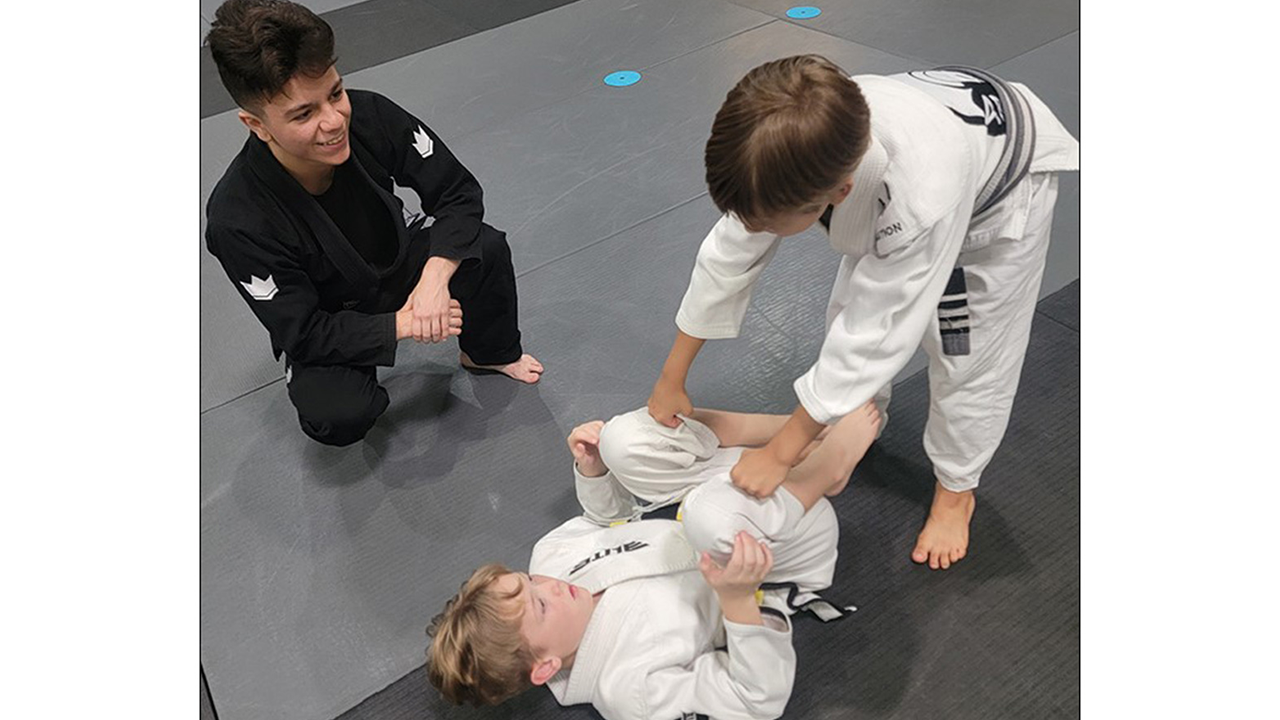
Screen Time to Mat Time: How Online Jiu Jitsu Turns Screens Into Active Learning
By a parent and educator | Jiu Jitsu Graduate
Few topics stir up more conversation among parents than screen time. We see our children glued to tablets, phones, gaming systems, and televisions, and we worry. Are they moving enough? Are they connecting with real people? Are they learning anything?
As a parent and an educator, I share those concerns. But I've also come to believe that screens themselves aren't the enemy. The real question is how screens are used. A screen that keeps a child sitting still for hours is very different from a screen that teaches a child something valuable and then sends them off to practice it with their body.
That is the idea behind what I call Screen Time to Mat Time. With a structured online youth Jiu Jitsu program, a short video lesson becomes the starting point for active, hands-on learning at home with family, siblings, and friends. The screen teaches. The mat transforms.
In this post, I'll share what research says about children's screen use and activity, how online Jiu Jitsu turns screen time into active time, and practical ways to build a healthier balance at home.
What Is "Screen Time to Mat Time"?
Screen Time to Mat Time is a simple routine:
- Children watch a short, focused Jiu Jitsu lesson on a screen.
- The screen goes off, and children step onto the mat to practice the technique with a partner.
- Children drill the technique several times, rewatching only the parts they need.
- Children talk about what they learned and what they want to work on next.
In this model, the screen is a teacher, not a babysitter. Most of the session is spent moving, thinking, and connecting with real people. Children learn that technology can be a tool for growth, not just entertainment.
At Jiu Jitsu Graduate, we say Home Training Is Where You Grow. Screen Time to Mat Time is how that growth begins.
What the Research Says About Screens and Activity
Here is a short summary of relevant research. (Full references appear at the end of this post.)
Many children exceed recommended screen time. Guidelines commonly recommend no more than 2 hours per day of recreational screen time for children ages 6 to 12, along with at least 60 minutes of physical activity and 9 to 12 hours of sleep (National Survey of Children's Health analysis). A review of 53 studies estimated that school-aged children ages 6 to 14 average about 2.77 hours of screen time per day, with 46.4% exceeding two hours daily (PMC review).
Screen time rose in recent years. A study in JAMA Network Open found that children's mean recreational screen time was 4.0 hours per day before the pandemic and increased during the pandemic period (JAMA Network Open).
Children need daily movement. The CDC recommends that children and adolescents ages 6 to 17 get 60 minutes or more of moderate-to-vigorous physical activity daily, including muscle-strengthening activity at least 3 days a week (CDC).
Children can learn movement skills from video. Research comparing video and live modeling for teaching motor skills found that both were effective, with no significant difference between them (International Journal of Inclusive Education).
Together, these findings suggest a practical path: rather than fighting screens entirely, families can use short, high-quality video lessons to launch more physical activity.
7 Ways Online Jiu Jitsu Turns Screen Time Into Active Time
- Short Lessons Lead to Long Practice
At Jiu Jitsu Graduate, lessons are broken into short, focused segments. A child might watch a few minutes of instruction and then spend fifteen to twenty minutes practicing. The ratio flips from "mostly watching" to "mostly moving."
This structure helps children build a new habit. Instead of watching one video after another, they learn to watch, then act. Over time, they begin to associate the screen with getting up and moving rather than sitting still.
- The Screen Becomes a Teacher, Not a Distraction
Much of children's screen time is passive entertainment. Online Jiu Jitsu is different. Every lesson has a purpose, a technique to learn, and a skill to practice. Children pay attention because they know they'll need the information on the mat.
As an educator, I love seeing children watch with purpose. They pause the video to study a detail, rewind to check a step, and ask questions. That's active learning, and it's a far cry from mindless scrolling.
- Practice Happens With Real People
One concern parents often raise about screens is isolation. Children can spend hours alone with a device. Jiu Jitsu requires a partner, so every session involves real, face-to-face connection.
Children practice with parents, siblings, cousins, or neighborhood friends. They communicate, cooperate, take turns, and encourage each other. The screen brings the lesson, but the people bring the experience to life.
- Movement Builds Strength, Coordination, and Fitness
When the screen goes off, children use their whole bodies. They push, pull, bridge, roll, and move through a wide range of motion. Jiu Jitsu builds strength, flexibility, balance, coordination, and endurance.
These benefits line up with the CDC's guidance that children include muscle-strengthening activity in their weekly routine (CDC). Several Jiu Jitsu sessions a week can help children work toward their daily activity goals.
- Goals Replace Endless Scrolling
Many apps and games are designed to keep children engaged for as long as possible, often without a meaningful endpoint. Jiu Jitsu provides real goals with real endpoints.
Students earn badges for completed positions, stripes and certificates for every five positions, and belts after evaluation. These milestones give children something meaningful to work toward. Instead of chasing the next level in a game, they're chasing real skills they can be proud of.
- Children Learn Healthy Technology Habits
Online Jiu Jitsu teaches children that technology can support learning and health. They learn to use a screen intentionally, for a specific purpose, and then put it away. These are valuable digital habits that will serve them throughout life.
Parents can reinforce this by talking about the difference between "active screen time" and "passive screen time." Active screen time teaches, creates, or leads to action. Passive screen time simply fills time. Children who understand the difference can make better choices on their own.
- Family Time Replaces Solo Screen Time
When Jiu Jitsu becomes a family routine, it naturally replaces some solo screen time with shared family time. Parents and children watch lessons together, practice together, and celebrate together.
Many parents find that children begin asking for Jiu Jitsu time instead of device time. The energy, laughter, and accomplishment of training together create a kind of satisfaction that passive screen time rarely provides.
Why Active Learning Beats Passive Watching
As an educator, I've seen the difference between watching and doing in every subject. Students who only watch a math problem being solved often feel like they understand it, until they try it on their own. Students who practice the problem themselves build real understanding.
Jiu Jitsu works the same way. A child can watch a technique ten times and still not be able to perform it. The learning happens when they step onto the mat, feel the movement, make mistakes, and adjust. That hands-on practice builds muscle memory, problem-solving skills, and genuine confidence.
This is why the "watch, then move" structure matters so much. The screen gives children a clear model. The mat gives them the experience. Together, they create deep, lasting learning that passive screen time simply can't provide.
Active learning also keeps children more engaged. When kids know they'll need to perform what they're watching, they pay closer attention. They notice details, ask questions, and stay focused. That focused attention is a skill that transfers to schoolwork and other areas of life.
Screen Balance Tips by Age
Young children (Kindergarten to Grade 2). Keep lessons very short and sessions playful. Watch together, practice right away, and finish with a fun mat game. Young children benefit most when a parent is actively involved in both the screen and mat portions.
Upper elementary (Grades 3 to 5). Children can begin following lessons more independently while a parent supervises practice. Introduce the "watch, then move" rule and let children help plan their weekly mat time.
Middle school (Grades 6 to 8). As devices and social media become more common, mat time offers a valuable counterbalance. Encourage students to set their own goals, track progress, and train with friends instead of spending extra time online.
High school (Grades 9 to 12). Teens can take full ownership of their training. Mat time becomes a healthy break from schoolwork and screens, and a way to manage stress. Older students can also mentor younger siblings, adding leadership to their routine.
How to Build a Healthy Screen Balance at Home
Here are practical steps to help your family move from screen time to mat time.
Set clear screen expectations. Talk with your children about daily screen limits for recreational use. Many families find it helpful to separate learning screen time from entertainment screen time.
Schedule Mat Time. Put Jiu Jitsu sessions on the family calendar, two to four times a week. Scheduled routines are easier to follow than good intentions.
Use the "watch, then move" rule. For every lesson watched, children practice before watching the next one. This keeps the focus on doing, not just viewing.
Create screen-free zones. Keep the training area free of other devices. Once the lesson is done, the screen goes off and the focus shifts to the mat.
Model healthy habits. Children notice how adults use their phones. Put your device away during family training and show that you value the time together.
Offer active alternatives. When children ask for more screen time, offer a choice: a Jiu Jitsu review session, a mat game, or outdoor play.
Celebrate active choices. Praise children when they choose movement over passive screens. Recognition reinforces good habits.
Fun Mat Time Activities to Replace Passive Screen Time
Technique Review Challenge. Children pick three techniques they've learned and practice each one five times per side.
Teach a Parent. Children teach a parent a technique without looking at the video, then check the lesson together to see what they remembered.
Shrimp Relay. Family members race across the mat using shrimping, a core Jiu Jitsu hip movement.
Hold the Position. One partner holds a position for ten to twenty seconds while the other moves safely, then switch.
Journal and Draw. After training, younger children draw the technique they learned, and older children write a short reflection.
A Sample Weekly Screen Time to Mat Time Plan
|
Day |
Screen Portion |
Mat Portion |
Total Time |
|
Monday |
Watch a new lesson (5 minutes) |
Practice slowly with a partner |
25–30 minutes |
|
Wednesday |
Rewatch tricky details (3 minutes) |
Drill the technique 10–15 times each side |
25–30 minutes |
|
Friday |
Quiz or review (5 minutes) |
Review older techniques and play a mat game |
25–30 minutes |
|
Weekend |
Explore one video from the vault (5 minutes) |
Family or friends training session |
30–40 minutes |
Notice how the screen portion stays short while the active portion takes up most of the session.
Keeping Home Training Safe
At Jiu Jitsu Graduate, home training follows three rules:
- Safety: Safety first, always. Move slowly, stay in control, and tap early. A technique done safely and slowly is worth more than one done fast and rough.
- Space: Take good care of your mat space and always review the area before training. Protective mats are required for youth technical training.
- Rules: Respect your partner. Your partner is helping you learn, so take care of them and follow the Golden Rules.
Visit our "Welcome to Home Training" page for full guidance.
Getting Started This Week
Pick two days this week for Mat Time. Set up your mats, cue up the first lesson, and agree on the "watch, then move" rule before you begin. Keep the first session short and fun, and end with a game so your child finishes excited for the next one.
Frequently Asked Questions
Isn't online Jiu Jitsu just more screen time?
Not in the usual sense. Lessons are short and lead directly to active practice. Most of each session is spent moving on the mat with a real partner.
How much screen time is in a typical session?
Usually just a few minutes of instruction, followed by fifteen to thirty minutes of active practice.
Can online Jiu Jitsu help my child be more active?
Yes. Regular home training sessions can help children work toward the CDC's recommendation of 60 minutes of daily physical activity.
What ages is the program for?
Our youth program serves students from kindergarten through 12th grade.
How do belt promotions work?
Students earn badges, stripes, and certificates as they progress, and belts through in-person or remote video evaluation by a Jiu Jitsu Graduate Coach.
What if my child would rather play video games?
Start small and make mat time fun. Short sessions, games, and family participation help children discover that active play can be just as enjoyable as screens.
Can Arizona ESA families use their funds?
Jiu Jitsu Graduate LLC works with Arizona ESA families through ClassWallet for eligible instruction and curriculum-based materials. See our ESA Payment page for details.
Conclusion: Let the Screen Teach and the Mat Transform
Screens are part of modern childhood, but they don't have to keep children still. With online Jiu Jitsu, a short video lesson becomes the spark for active learning, real connection, and meaningful goals. Children move more, connect with family and friends, and learn that technology can be a powerful tool for growth.
Research on screen time, physical activity, and video learning points to a balanced approach: use screens with purpose, and make sure they lead to movement.
You don't have to eliminate screens to raise healthy, active children. You simply have to give screens a better job. When a few minutes of video lead to thirty minutes of movement, laughter, and learning with family and friends, the balance begins to shift on its own. Over time, children start to see the mat as the main event and the screen as just the starting point. That is a habit worth building, and it begins with the very first lesson. Start small, be consistent, and celebrate every choice your child makes to move, learn, and connect.
That is why Jiu Jitsu Graduate at www.jiujitsugraduate.com is the ideal online training for youth success and growth. With short, focused lessons, guided home training, weekly new techniques, a vault of 1,000+ videos, and belt promotions earned through real evaluation, Jiu Jitsu Graduate turns screen time into mat time and helps children grow stronger, healthier, and more confident.
Guided on the Path. Nurtured to Succeed. Always Moving Forward.
Start your child's journey today at www.jiujitsugraduate.com.
References
- S. children meeting sleep, screen time, and physical activity guidelines. National Survey of Children's Health analysis. PubMed Central. https://pmc.ncbi.nlm.nih.gov/articles/PMC7574791/
- Digital media use and screen time exposure among youths. PubMed Central. https://pmc.ncbi.nlm.nih.gov/articles/PMC12364383/
- Trends in screen time use among children during the COVID-19 pandemic, July 2019 through August 2021. JAMA Network Open. https://jamanetwork.com/journals/jamanetworkopen/fullarticle/2801457
- Centers for Disease Control and Prevention. Child Activity: An Overview. https://www.cdc.gov/physical-activity-basics/guidelines/children.html
- Using video and live modelling to teach motor skill to children with autism spectrum disorder. International Journal of Inclusive Education. https://www.tandfonline.com/doi/full/10.1080/13603116.2018.1441335
Author